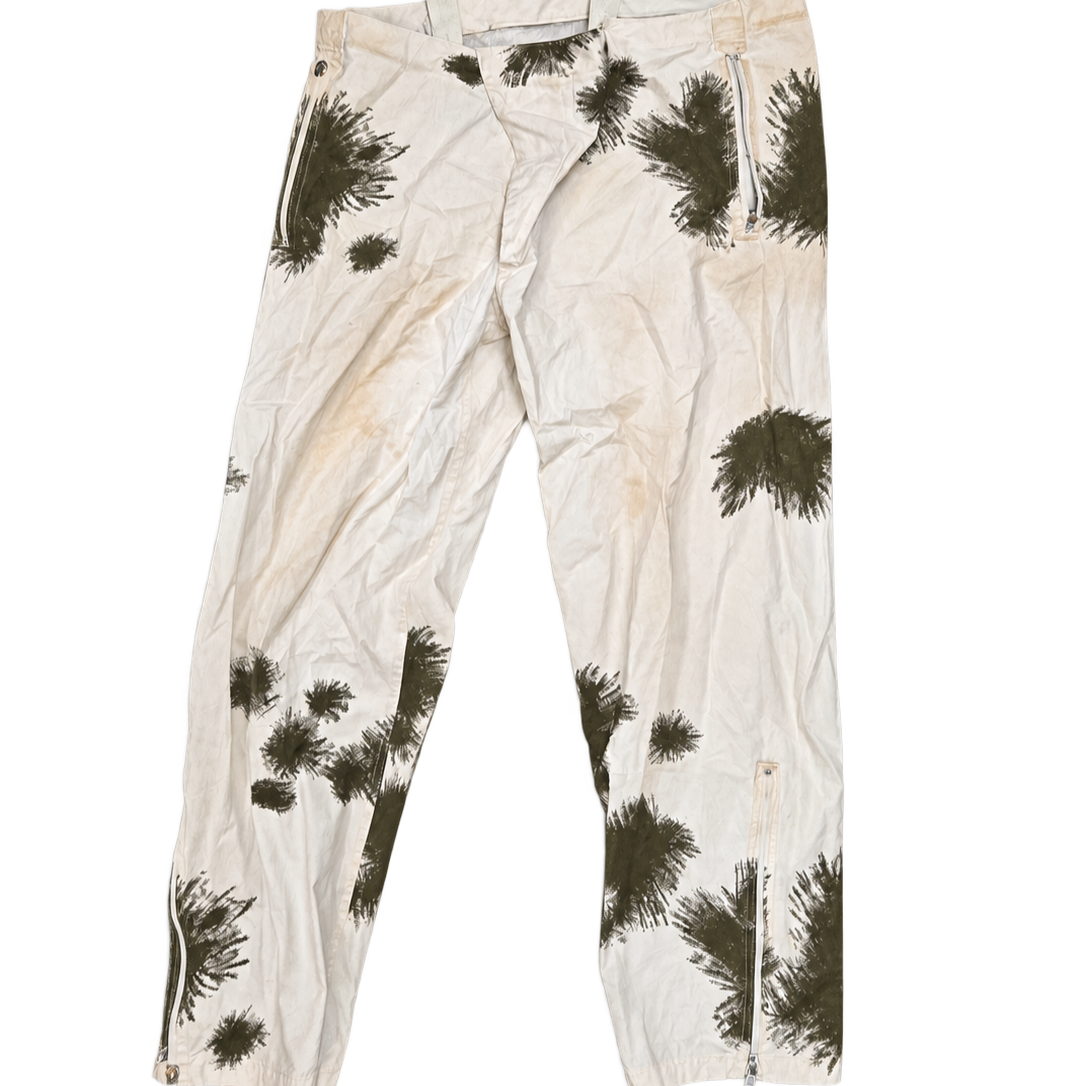
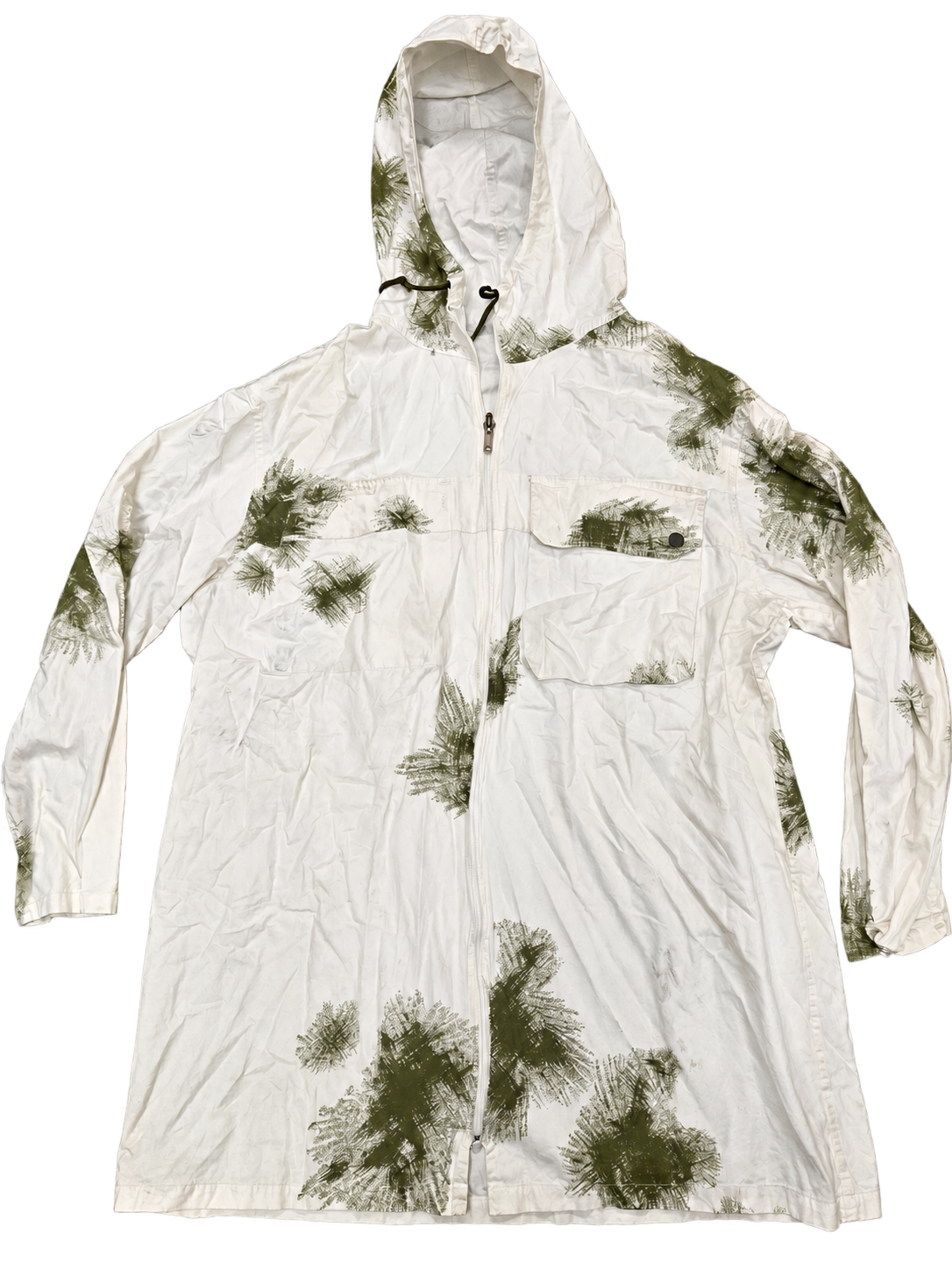
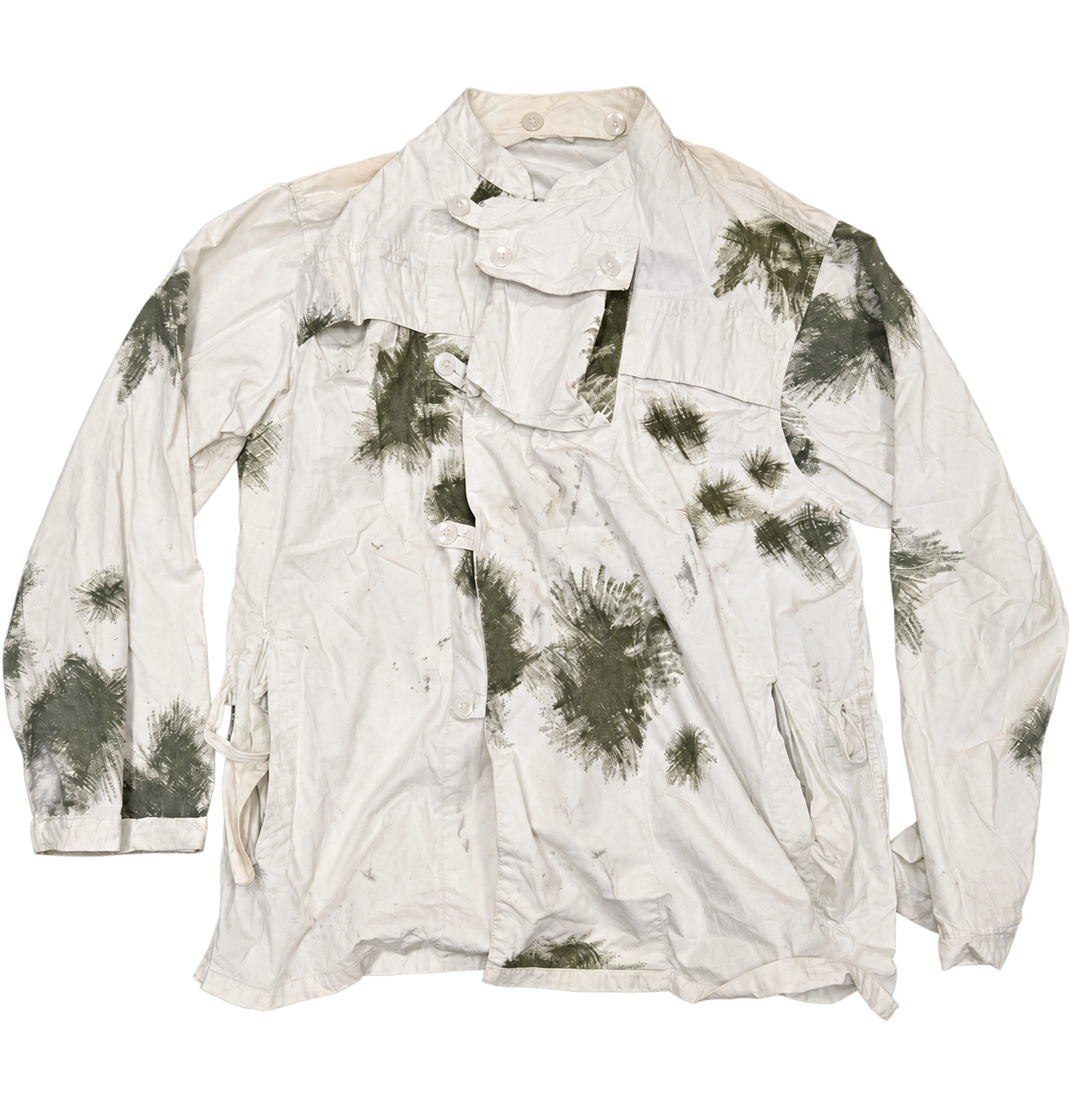
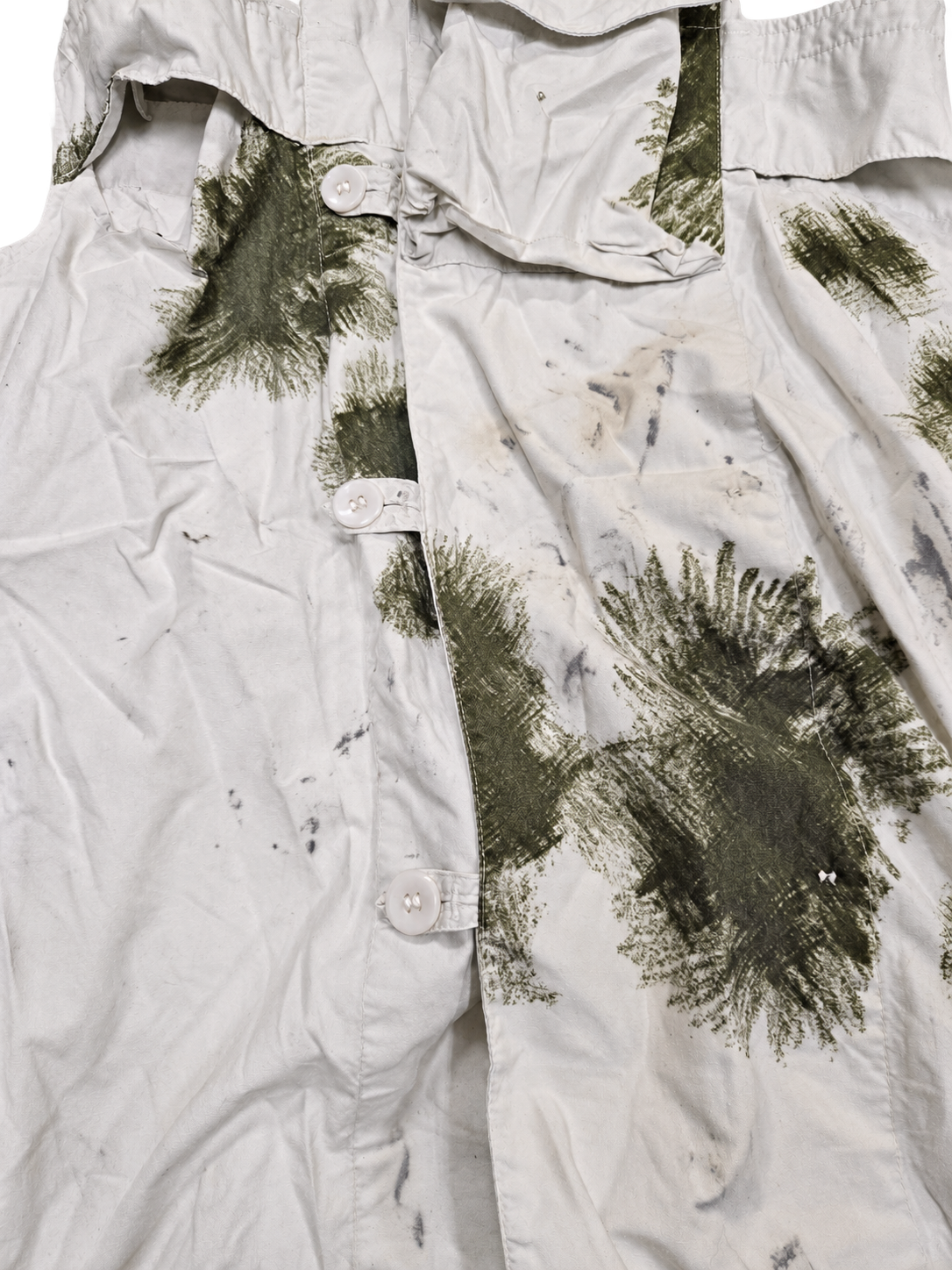
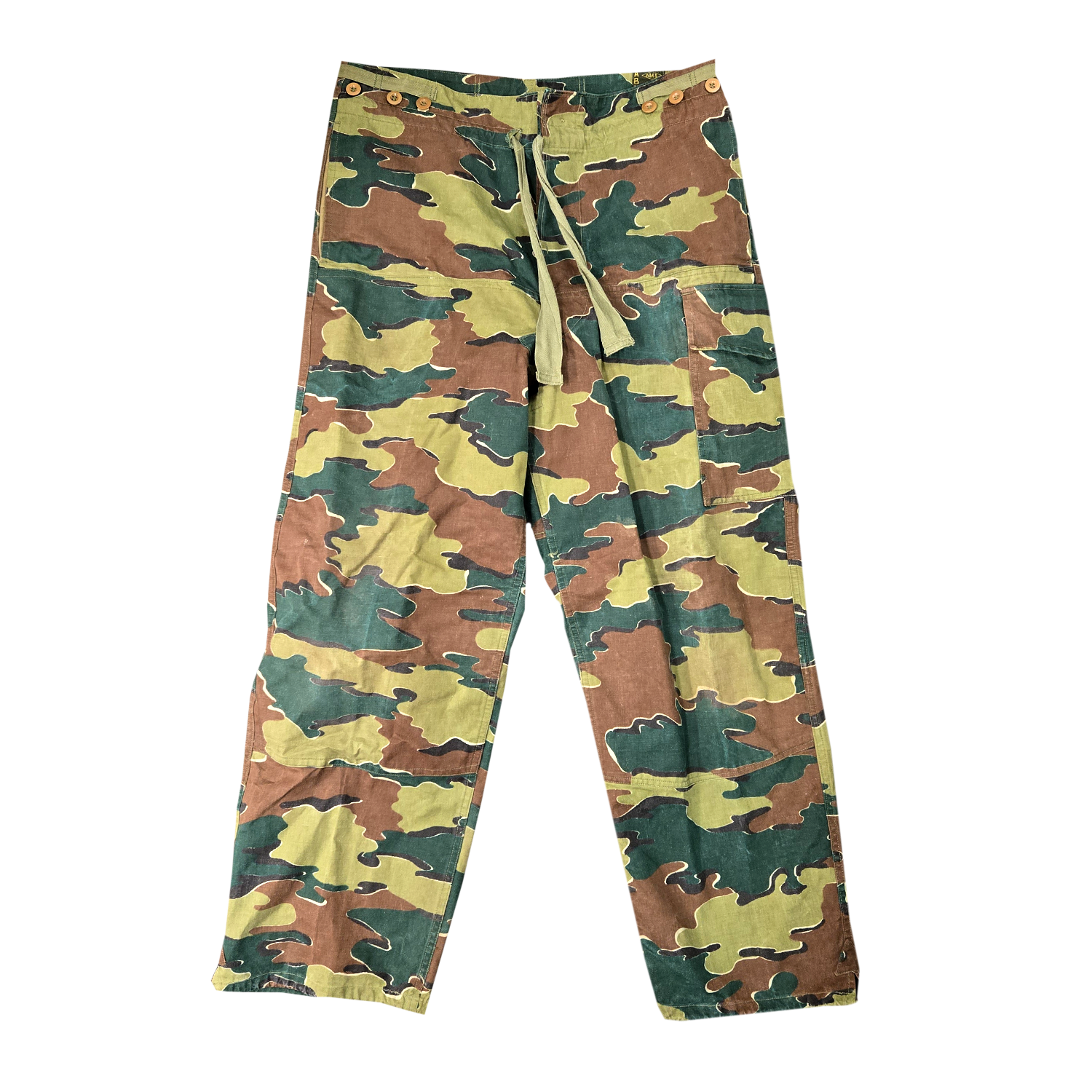
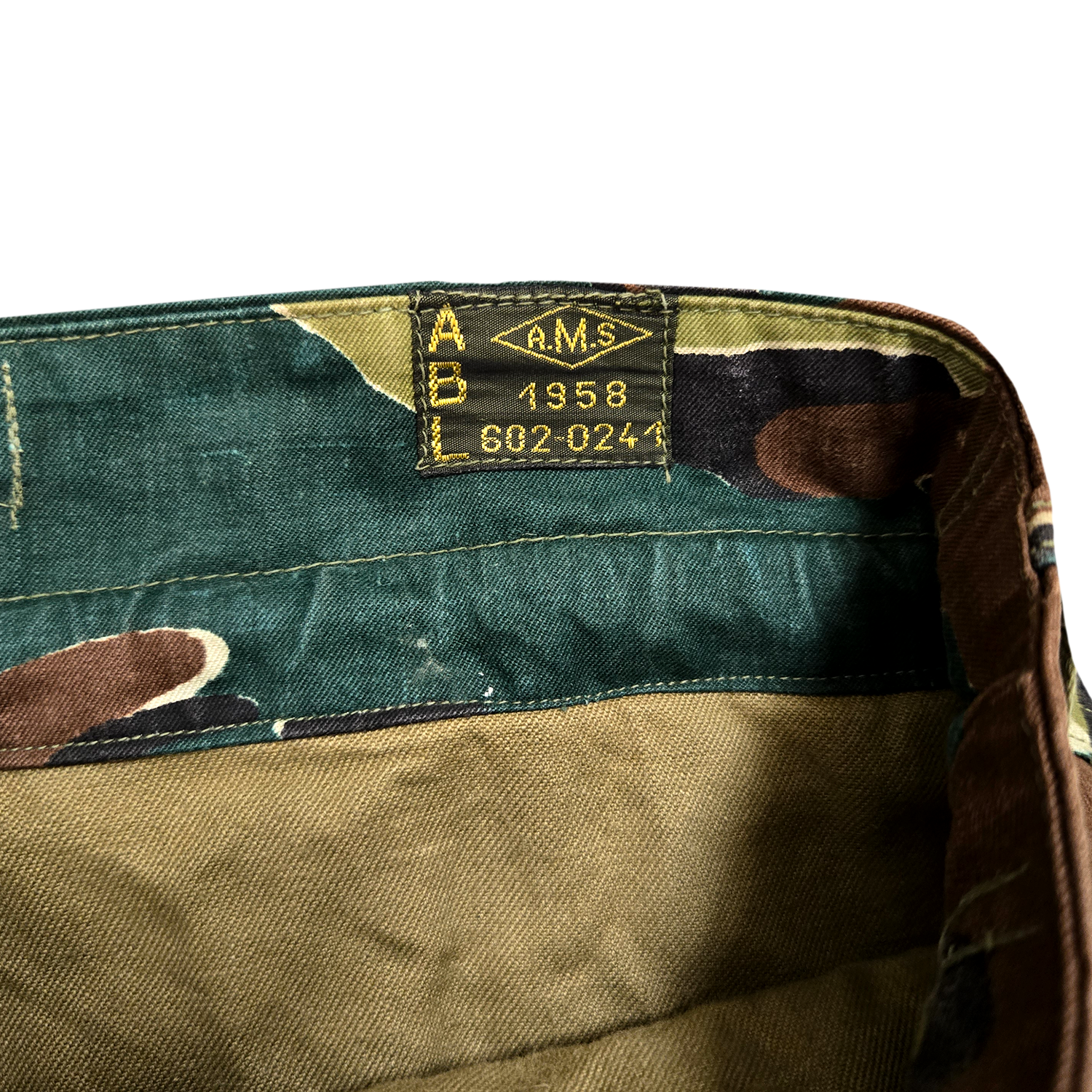
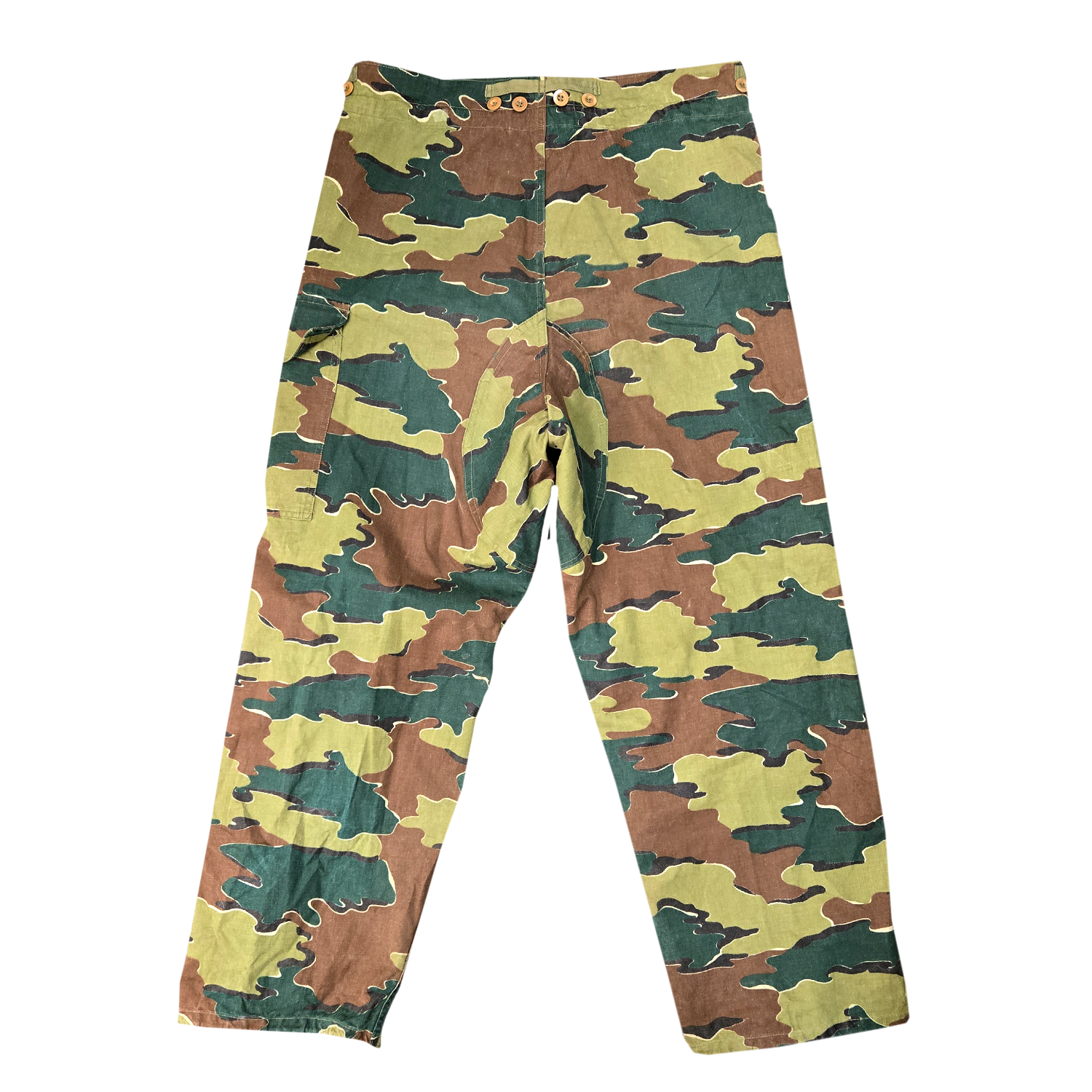
The Bundesgrenzschutz (BGS) was formed in 1951 to guard the new border between the East and West German nations. The BGS was a paramilitary organization that actually had military status until the 1990s. These vests were adapted from the WW2 pattern, Splintertarn and Sumpftarn, used by the Nazis. With a couple small changes - it was pressed into service. Sumpftarn, the new pattern, was brought about in the early 1950s and retired in 1976. So with only limited use by field units of the BGS, any Sumpftarn item is very rare.
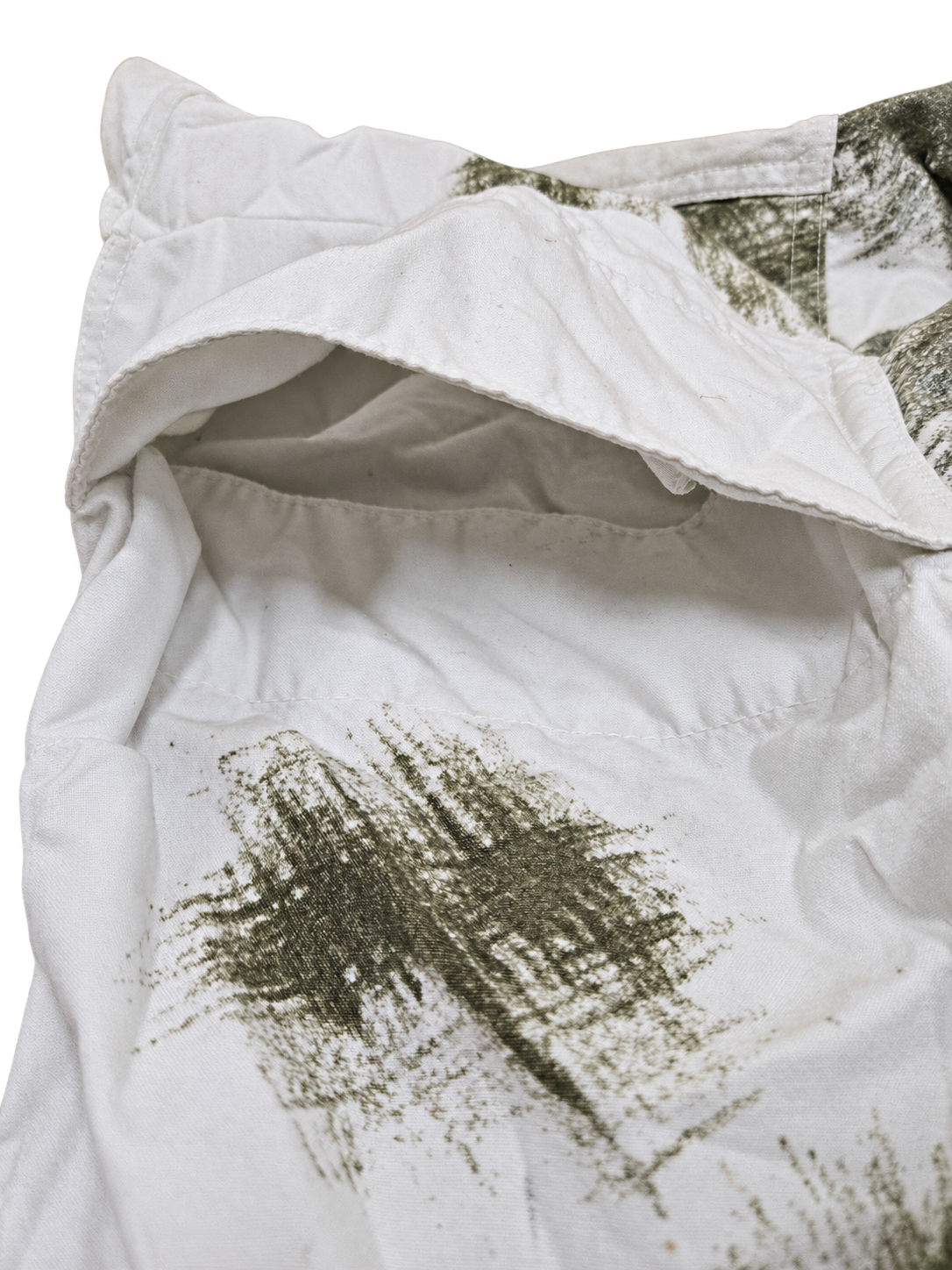
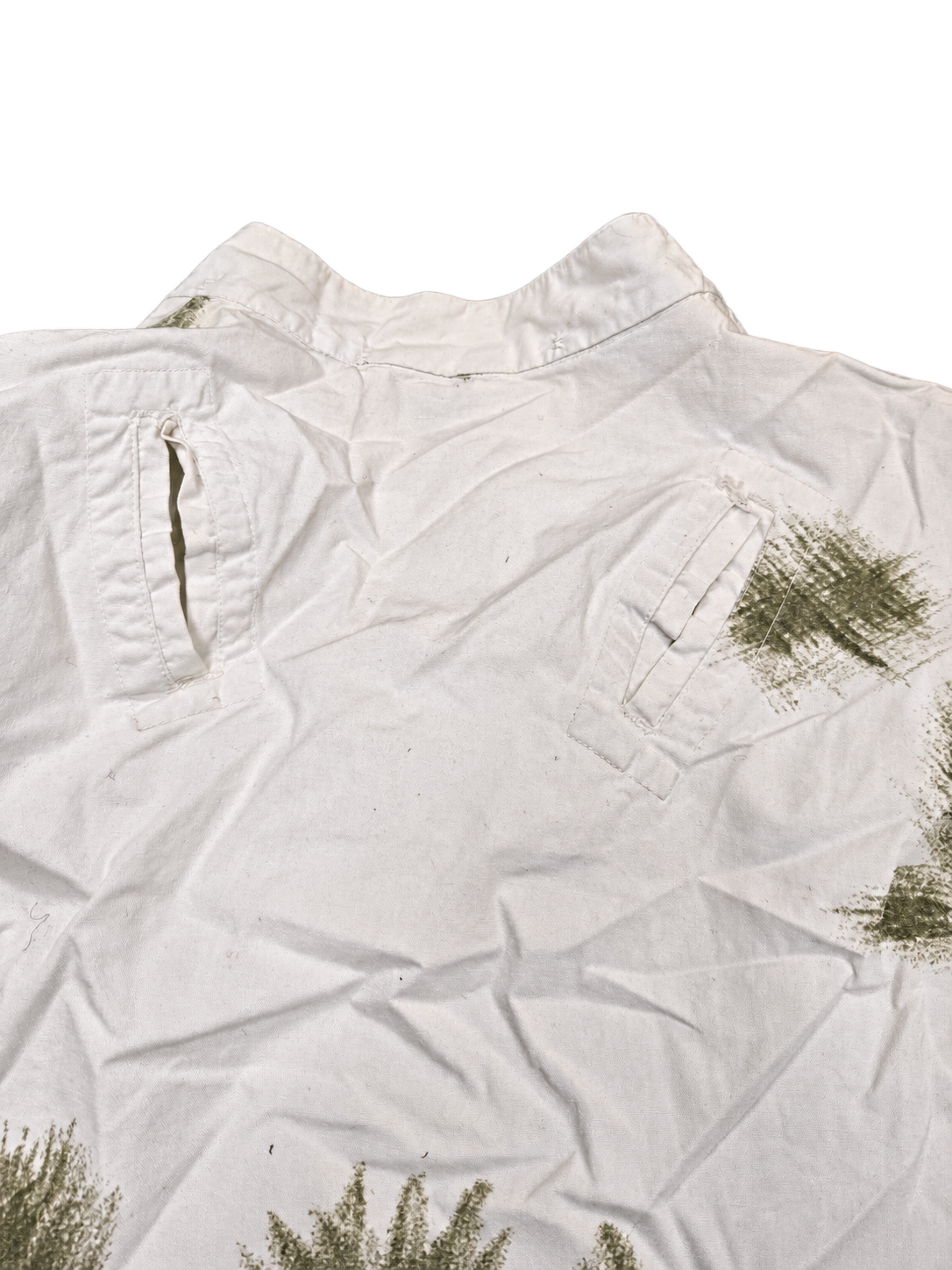
The tunic pockets are meant to hold magazines. One is shown turned out in the gallery to demonstrate this.
This jacket is the result of the German Government “demilling” process. They did this by slashing the jackets and cutting off the sleeves for the most part. There is clear evidence of this, but good repairs have been made.
Size 48 only.
The Bundesgrenzschutz (BGS) was formed in 1951 to guard the new border between the East and West German nations. The BGS was a paramilitary organization that actually had military status until the 1990s. These vests were adapted from the WW2 pattern, Splintertarn and Sumpftarn, used by the Nazis. With a couple small changes - it was pressed into service. Sumpftarn, the new pattern, was brought about in the early 1950s and retired in 1976. So with only limited use by field units of the BGS, any Sumpftarn item is very rare.
The tunic pockets are meant to hold magazines. One is shown turned out in the gallery to demonstrate this.
This jacket is the result of the German Government “demilling” process. They did this by slashing the jackets and cutting off the sleeves for the most part. There is clear evidence of this, but good repairs have been made.
Size 48 only.
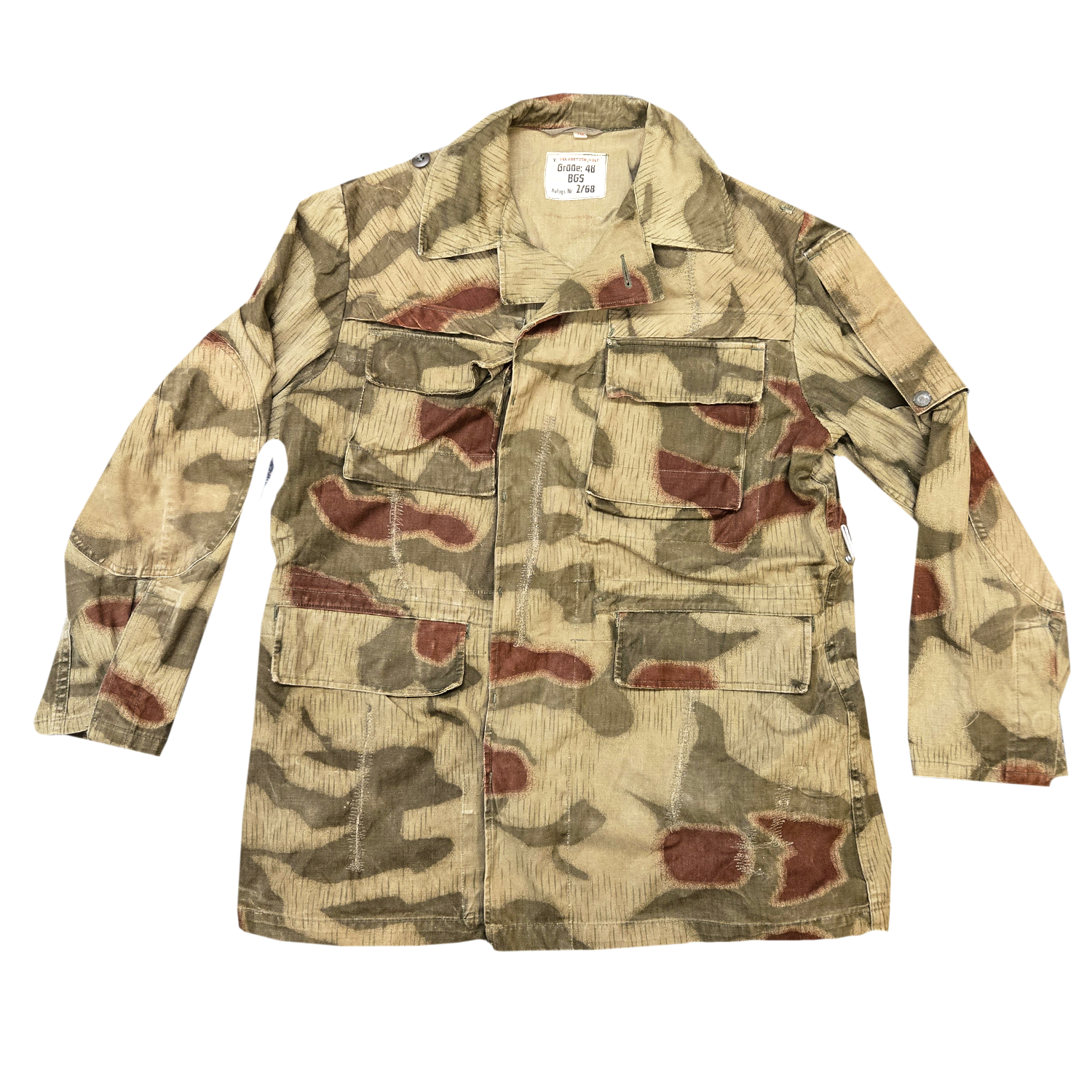 Image 1 of 8
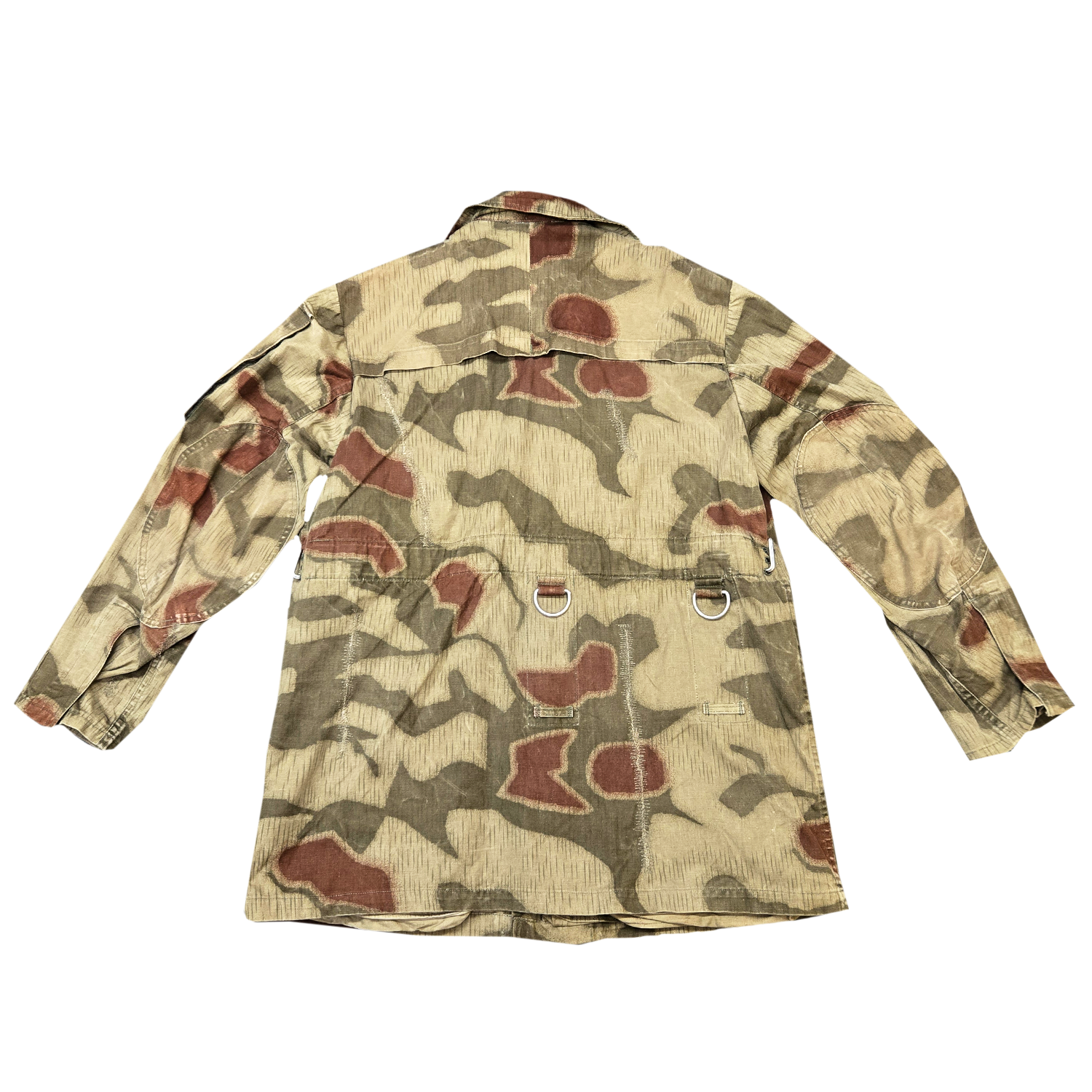 Image 2 of 8
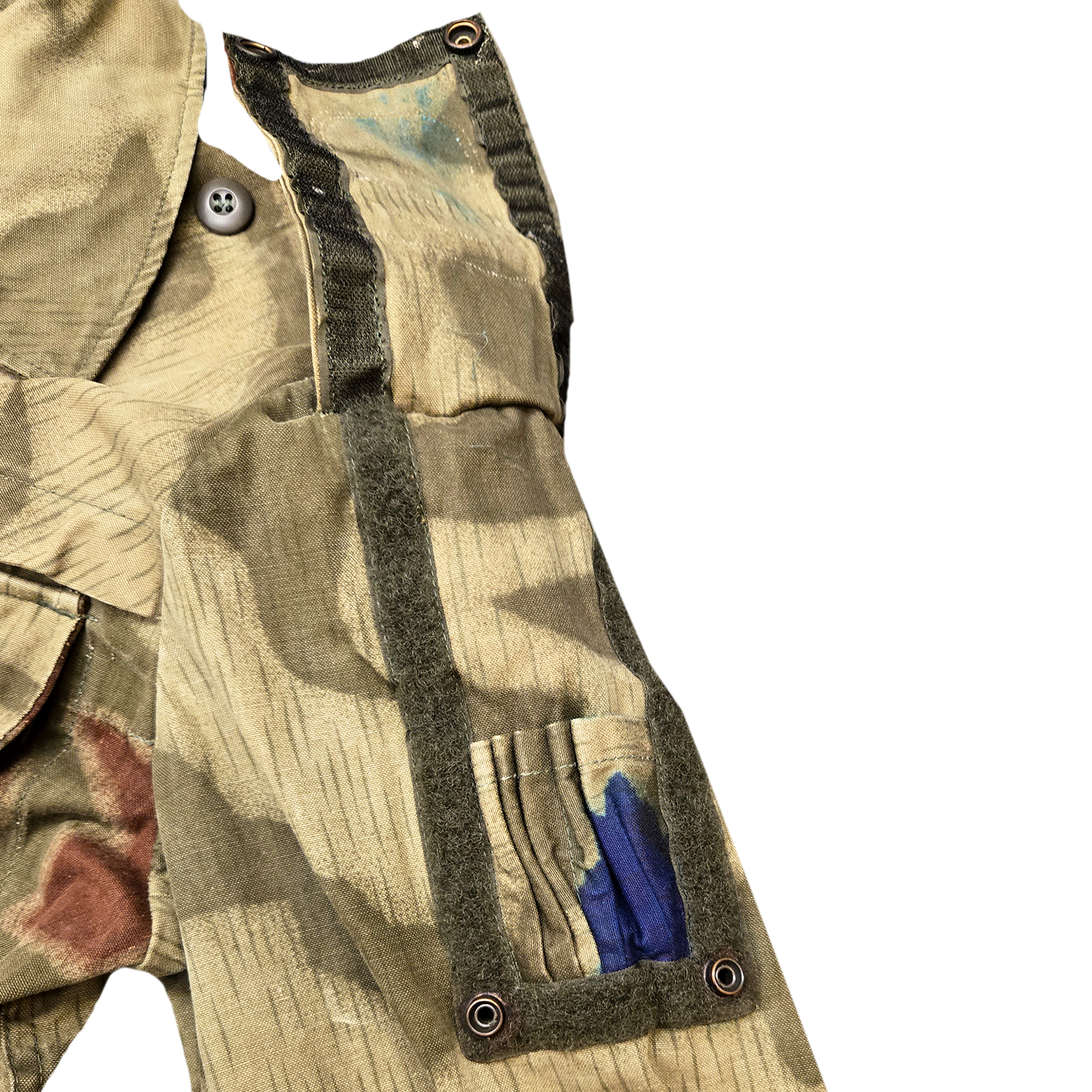 Image 3 of 8
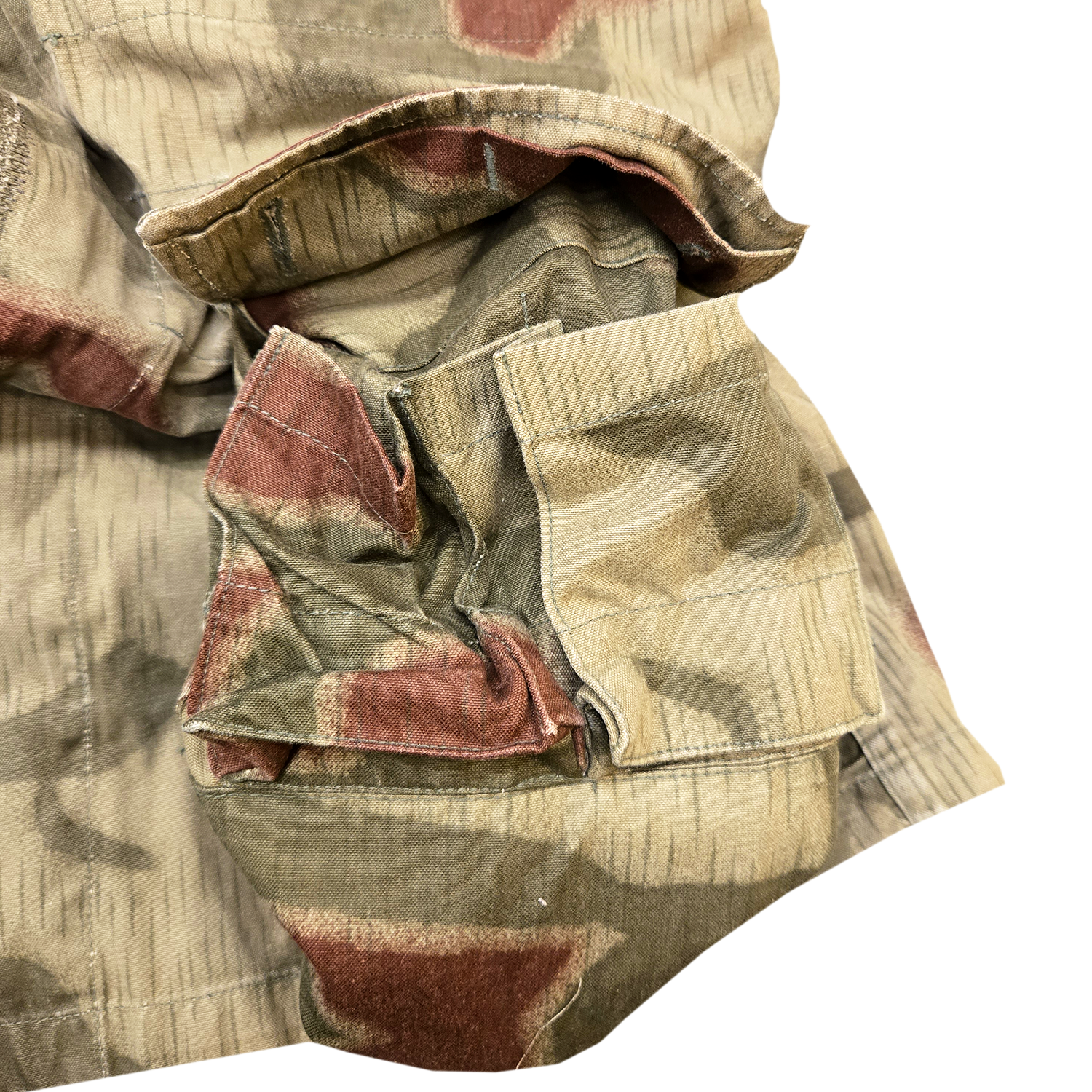 Image 4 of 8
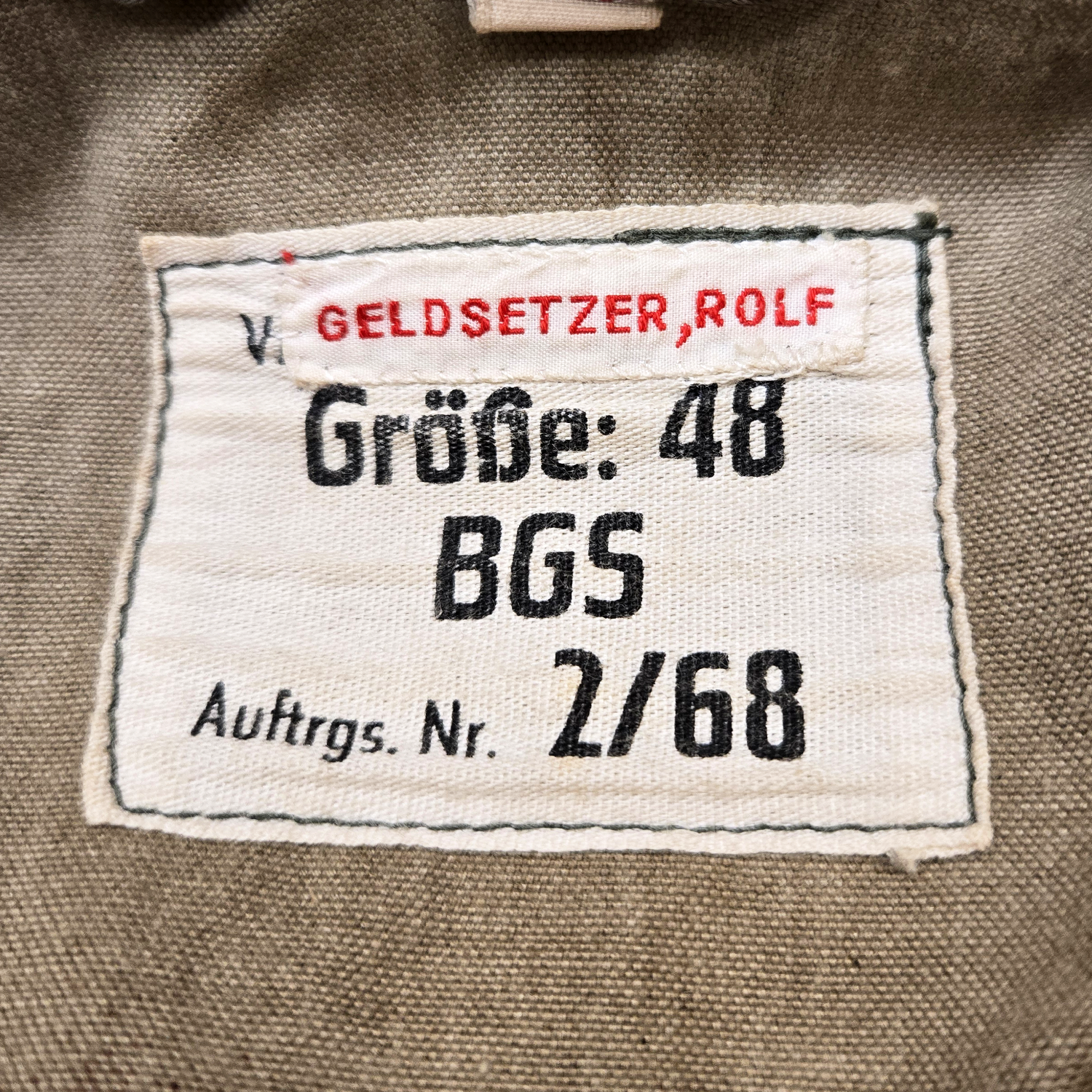 Image 5 of 8
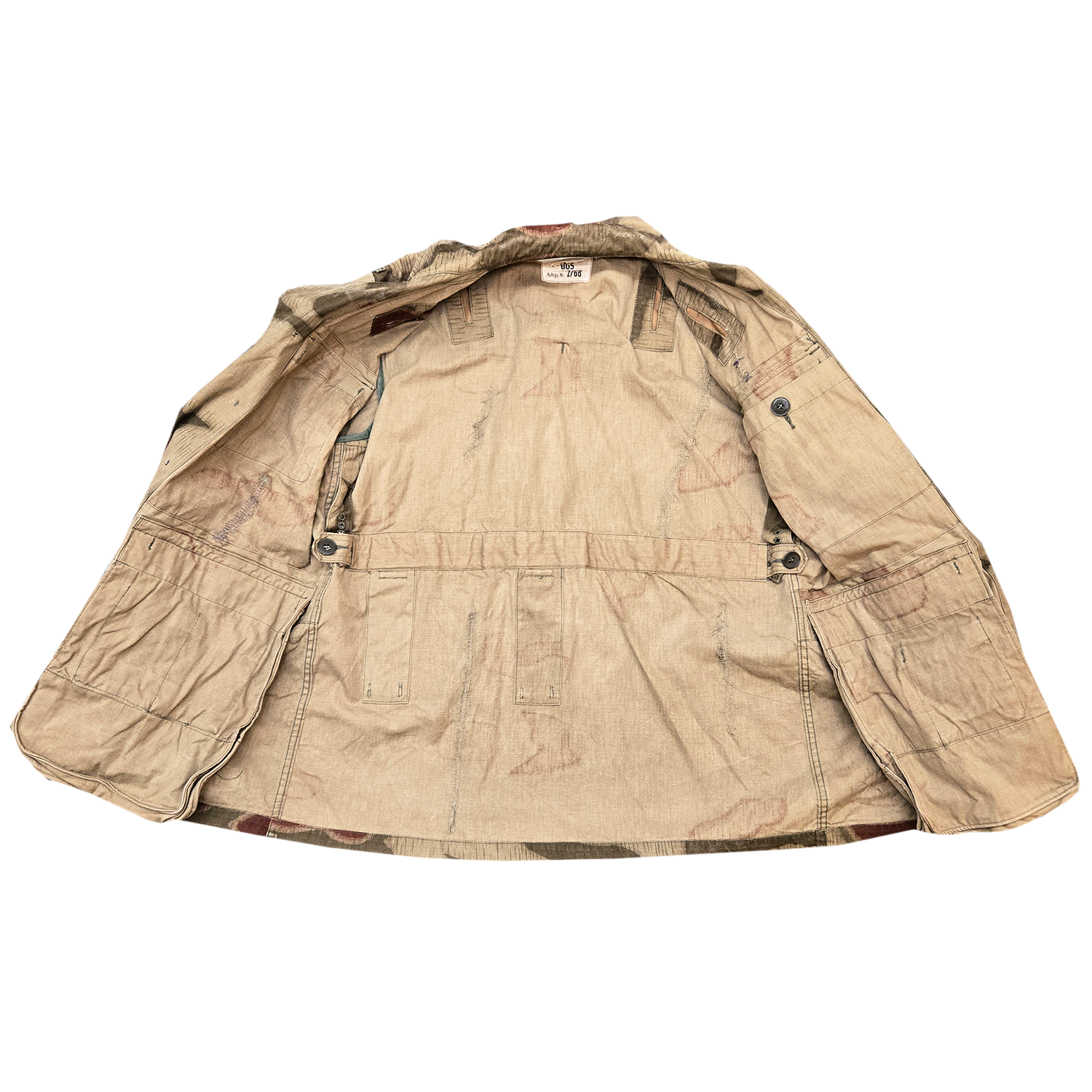 Image 6 of 8
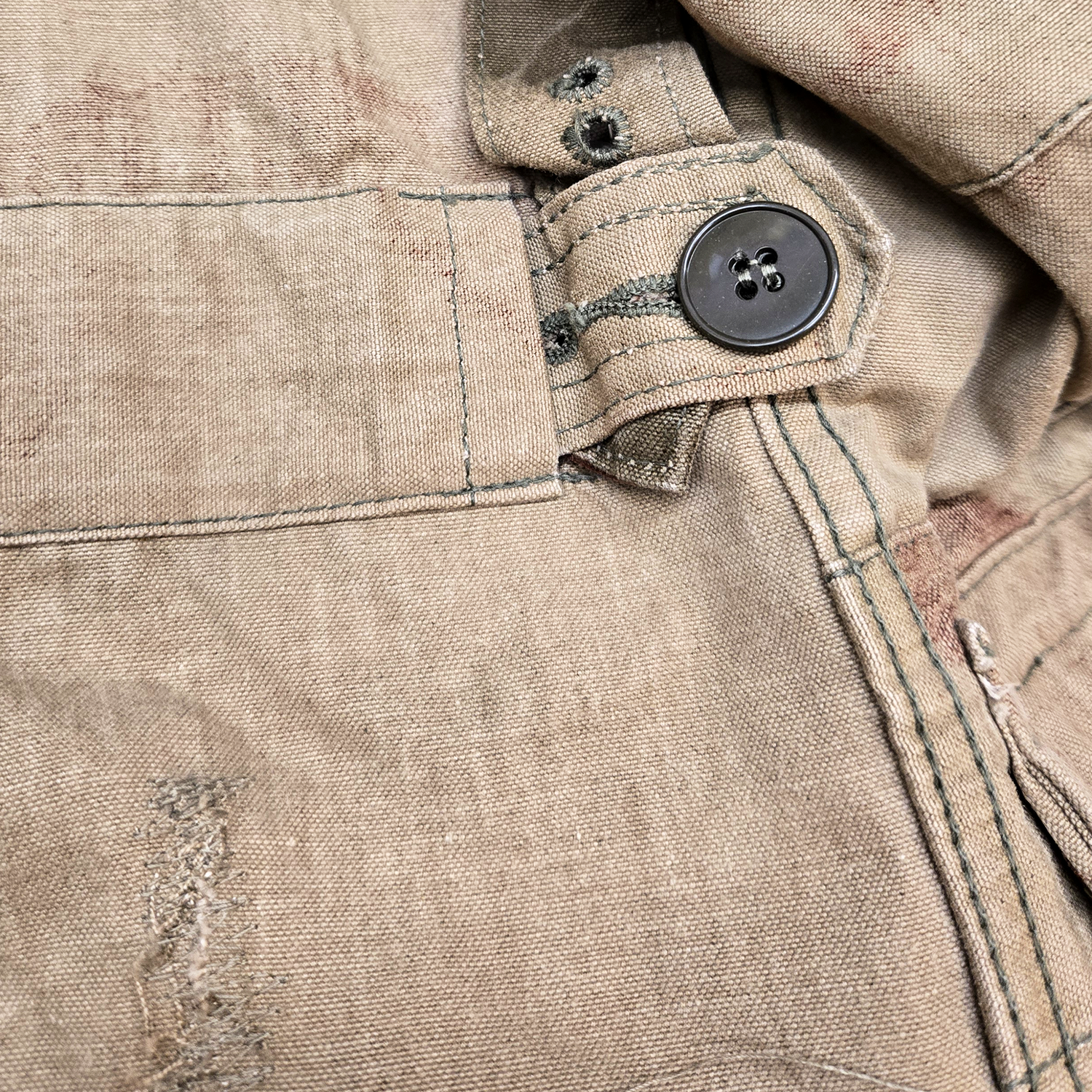 Image 7 of 8
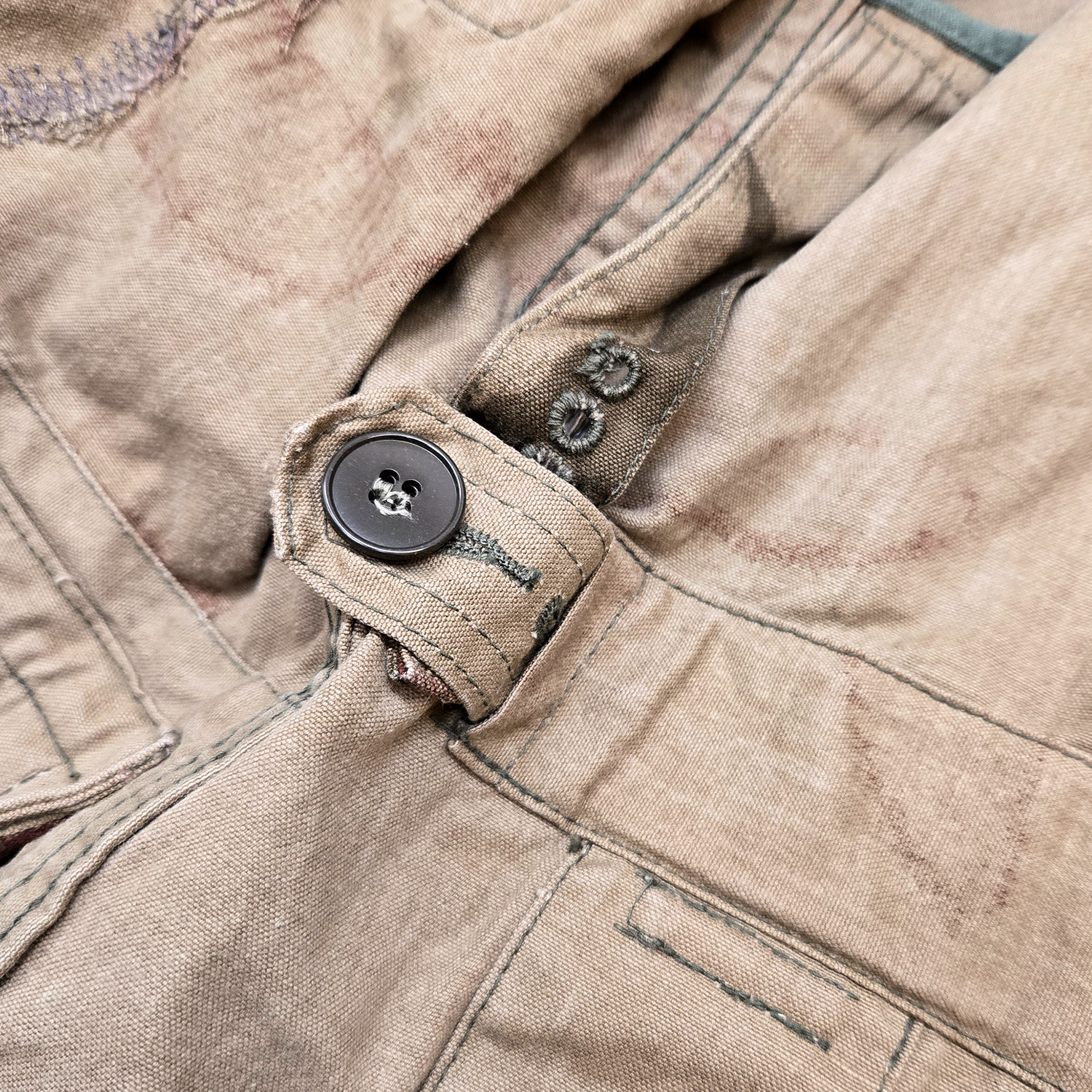 Image 8 of 8